
Non-Slip Safety Coatings for Slippery Industrial Floors in Kuala Lumpur
Eliminate workplace slip hazards across Kuala Lumpur with aggregate broadcast systems, textured polyurethane topcoats, and verified slip-resistance testing for food, industrial, and commercial facilities.
Slip and Fall Injuries Are Preventable, But Only If the Floor Is Correct
Slip and fall accidents are among the most consistent causes of reportable workplace injury in Malaysian manufacturing, food processing, and warehousing. In Klang Valley environments where wet floors, spilled oils, cleaning chemicals, and pedestrian traffic intersect constantly, a smooth floor surface is not just uncomfortable; it is a documented hazard that creates DOSH compliance liability and real risk of serious injury to workers.
The frustrating reality across the Malaysian market is that many industrial floor coating projects are specified and installed without any consideration for slip resistance. A new, smooth epoxy floor looks professional and clean on handover day. On the first morning it is wet from a CIP cycle or from process water, it can become dangerously slippery, and the facility’s safety record will eventually reflect the mismatch.
Epoxy Ninja Malaysia installs non-slip floor coating systems that deliver measured, documented slip resistance for the specific conditions of your environment, wet, oily, chemical-contaminated, or all three at once.
Why KL Environments Amplify Slip Risk
Three factors combine to make the Klang Valley a particularly unforgiving environment for smooth industrial floors:
Tropical humidity: Ambient relative humidity above 80% produces condensation on cooler slab surfaces whenever temperature differentials exist, creating slippery films on what workers perceive as dry floors. This is a particular issue near chilled rooms, dock levellers, and air-conditioned transitions.
Monsoon water intrusion: Main dock doors at Klang Valley warehouses see substantial water tracking during the November to February and April to May monsoon periods. Aggressive aggregate broadcast is the only reliable countermeasure at those threshold zones.
Aggressive daily washdowns: Food plants, commercial kitchens, and pharmaceutical clean areas across Petaling Jaya, Shah Alam, and Subang Jaya use high-pressure, high-temperature washdowns that create large volumes of wet floor during cleaning windows. A system that performs well only when dry is fundamentally incompatible with this workflow.
How Slip Resistance Is Created in Floor Coatings
Slip resistance in a coated floor is a function of surface texture at the microscopic and macroscopic level. A completely smooth floor provides minimal grip, especially when wet or contaminated. Creating usable friction requires introducing surface irregularities, either through aggregate particles embedded in the coating or through a textured topcoat formulation.
Aggregate Broadcast Systems: Maximum Performance
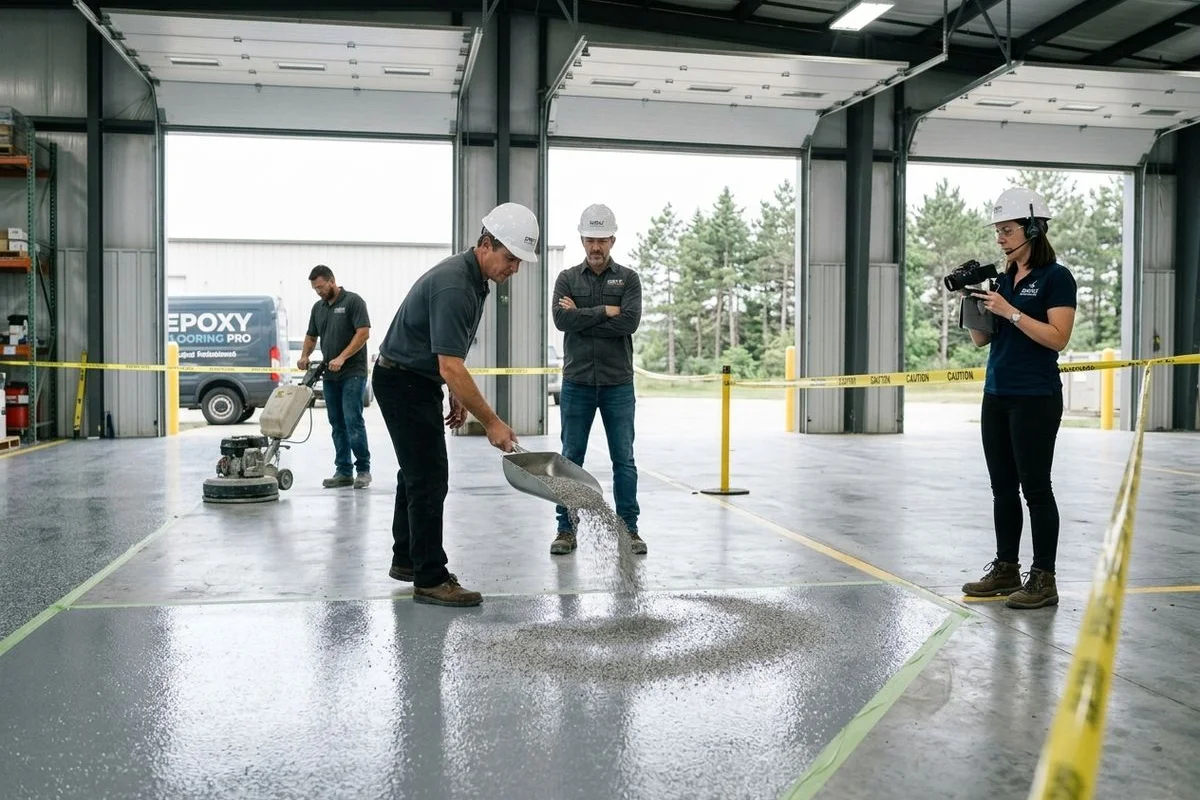
Aggregate broadcast is the most effective method for creating and maintaining high slip resistance in industrial floor coatings. The process involves broadcasting hard mineral aggregate (aluminium oxide, garnet, or silica) into a wet coating layer at a specified rate per square metre. The aggregate particles protrude slightly from the cured coating surface, creating thousands of friction points per square centimetre.
Aluminium oxide aggregate is the preferred choice for high-demand environments. It is one of the hardest minerals available commercially, second only to diamond, which means it resists wear exceptionally well and maintains its texture through years of foot and equipment traffic. Aluminium oxide broadcast is the standard specification for food processing areas, loading docks, stair treads, ramp surfaces, and any area with high traffic and wet or oily contamination.
Garnet aggregate provides slightly less aggressive texture than aluminium oxide but is still significantly harder than most floor coating binders. It is a good choice where slightly less texture is preferred while still achieving required COF values, such as hotel back-of-house corridors.
Particle size selection is critical. Coarser aggregate creates higher initial slip resistance but also creates a surface that is harder to clean and more aggressive on footwear. We select particle size based on the required COF, the cleaning equipment used, and the type of foot traffic in the space.
Textured Topcoats: Moderate Slip Resistance
For environments where moderate slip resistance is required without the aggressive texture of aggregate broadcast, textured polyurethane and epoxy topcoat formulations provide a fine texture that improves grip over smooth finishes. These are appropriate for office corridors, showroom floors, and environments where high COF is required but extreme texture is not.
Textured topcoats are also used as a refresher application over existing smooth coatings in good condition, providing improved slip resistance without a complete recoat.
Testing and Documentation: Proving Compliance
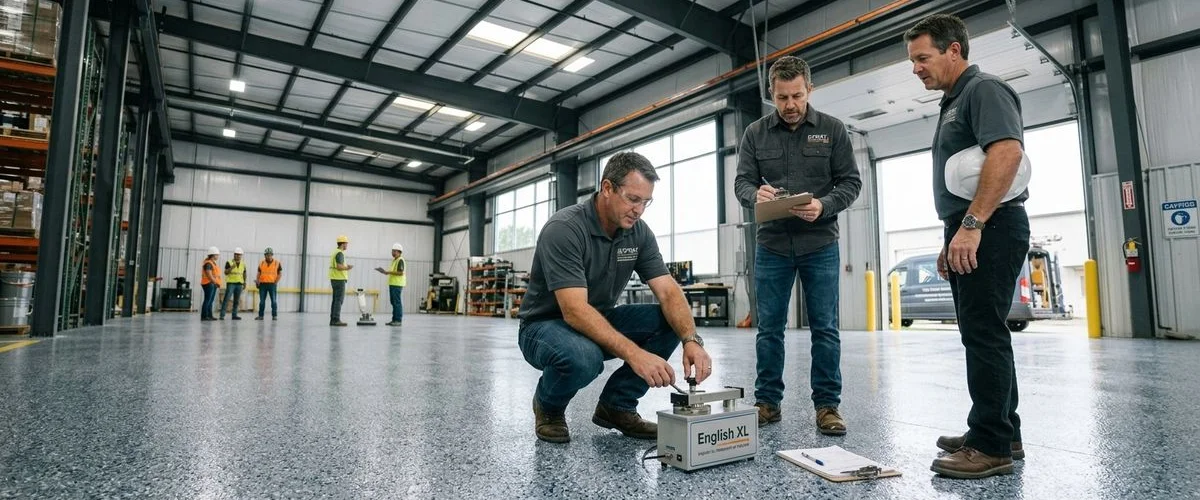
The difference between a floor that looks non-slip and a floor that is certified non-slip is documented testing. We test every non-slip installation using calibrated slip-resistance measurement equipment, and the report is yours as part of the project handover.
ASTM C1028 Static COF Testing
The Static Coefficient of Friction (SCOF) test uses a standardised neolite foot pad pulled across the floor surface under a controlled load. Results are reported as a static COF value that can be compared directly against ANSI A1264.2 recommendations and your internal HSE targets.
BOT-3000E Tribometer Testing
The BOT-3000E is a digital tribometer that measures both static and dynamic COF values under controlled wet and dry conditions. This automated testing method reduces operator variability and produces highly reproducible results. For environments where wet-condition performance is critical (food processing, commercial kitchens, pool surrounds) we test under the relevant wet condition rather than relying on dry-floor data.
Documentation for Audit and Insurance Purposes
Test results are documented in a formal report that includes test method, conditions, results at multiple locations, and pass or fail determination. This documentation supports:
- DOSH and HSE compliance, demonstrating proactive identification and control of slip hazards under the Occupational Safety and Health Act 1994
- ANSI A1264.2 alignment, documenting walking surface COF against the international standard most multinational customers reference
- Insurance underwriting, where many local and international carriers now request slip-resistance documentation on facilities with high pedestrian traffic
- Incident defence, where pre-incident documentation of compliant slip resistance is valuable evidence if a claim does occur
High-Risk Environments We Serve Across the Klang Valley
Food processing and commercial kitchens: Wet floors, organic contamination, and frequent chemical washdowns create extreme slip hazards. We specify aggregate broadcast systems with food-safe topcoats that meet HACCP, JAKIM Halal, and health department expectations while delivering the slip resistance these environments demand.
Loading docks and receiving areas: Transition zones between interior and exterior environments where rainwater, grease, and forklift tyre wash combine. Aggressive aluminium oxide broadcast systems with bright colour designation are our standard specification for these zones across Port Klang and Shah Alam.
Automotive service and manufacturing: Oil, coolant, and hydraulic fluid make smooth floors extremely hazardous. Non-slip broadcast systems provide grip even with petroleum contamination, a reality for service bays in Glenmarie and the industrial estates along the Federal Highway.
Chemical processing areas: Process spills, washdown water, and chemical vapour condensation create slip hazards. Chemical-resistant topcoats over aggregate broadcast combine slip resistance with chemical protection, linked directly to our containment and tank coating practice.
Healthcare and pharmaceutical facilities: Wet zones in cleanrooms, sterile processing, and patient areas require non-slip finishes compatible with sanitation protocols. We specify aggregate systems that meet both slip resistance and cleanability requirements, tested under the disinfectants actually used on site.
Call Epoxy Ninja Malaysia on 012-3751234 to schedule a slip hazard assessment. We will measure your current floor, identify high-risk zones, specify the appropriate non-slip system, and deliver the documented COF testing that proves your Kuala Lumpur or Klang Valley floor is safe.
What's Included
Our Non-Slip Safety Coatings Installation Process
Slip Hazard Assessment
We assess the current floor, identify wet and oily zones, review your incident log, and determine the required coefficient of friction for your specific environment. Siti Nurhaliza coordinates the assessment around your shift pattern to minimise disruption to active Klang Valley operations.
Surface Preparation
Existing surface is cleaned, degreased, and abraded to ensure adequate adhesion for the new coating or topcoat. Oil and chemical contamination must be fully removed before any coating is applied, a step where cheaper contractors routinely cut corners.
Primer or Bonding Coat Application
A penetrating primer or bonding coat is applied to the prepared surface. For existing coatings in good condition, an adhesion-promoting bonding coat allows application over the existing system without full removal.
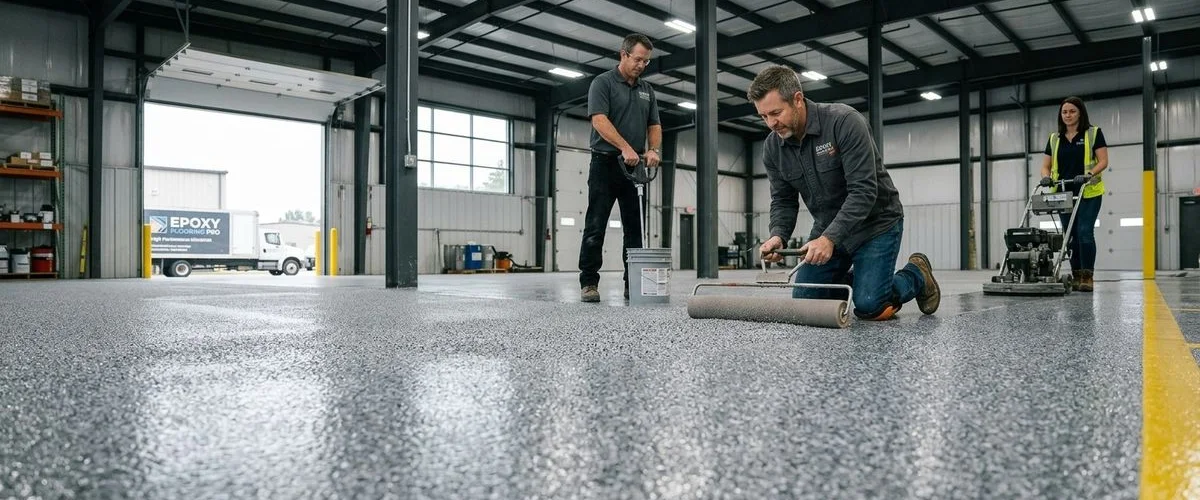
Non-Slip Aggregate Broadcast
Aluminium oxide, garnet, or silica aggregate is broadcast into the wet coating at the specified rate per square metre. Aggregate type, particle size, and broadcast rate determine the final slip-resistance value, which we target to your use case rather than a generic default.
Encapsulation and Topcoat
Broadcast aggregate is encapsulated with a clear or pigmented topcoat that locks particles in place and provides the chemical resistance and cleanability required for the environment. Food plant topcoats are selected for compatibility with CIP chemistry.
Slip-Resistance Testing & Documentation
Completed surface is tested using calibrated slip-resistance equipment. Results are documented with coefficient of friction values, test conditions, and pass or fail determination against your specified or regulatory requirement.
Why Choose Epoxy Ninja Malaysia
Verified COF Values, Not Just Texture
We test completed non-slip surfaces with calibrated equipment and provide documented coefficient of friction values. A floor that looks rough is not the same as a floor that meets DOSH expectations or ANSI A1264.2 slip-resistance recommendations, and your safety committee should not have to take our word for it.
Wet and Oily Condition Performance
A floor that is slip-resistant when dry but fails in wet or oily conditions provides false assurance. We specify and test systems for your actual use conditions, dry, wet, or oily, not ideal laboratory conditions. KL food plants and kitchens are never dry.
Documentation for Audit and Insurance
We provide test documentation that supports DOSH compliance, multinational customer audits, and local insurance underwriting. The report demonstrates due diligence in your safety program and is structured for direct inclusion in your HSE management system.
Retrofit Capability
In many cases we can apply non-slip treatment over existing floor coatings in good condition without full removal and recoating, which significantly reduces cost and downtime across Klang Valley facilities where production pauses are expensive.
What Our Clients Say
"We had three slip and fall incidents in our Petaling Jaya processing area inside one year. Epoxy Ninja Malaysia assessed the floor, installed an aluminium oxide broadcast system, and provided documented COF testing. Eighteen months since installation, we have had zero incidents and our multinational customer's HSE audit closed the finding."
"Our Shah Alam warehouse received a slippery floor finding during a DOSH inspection after a wet-weather forklift incident. Epoxy Ninja Malaysia installed a non-slip coating in the transition zones, tested it, and provided the documentation we needed to close the finding. The process was professional from first visit to final report."
Frequently Asked Questions
What is coefficient of friction and what values are required for safety compliance?
What types of aggregate do you use for non-slip surfaces?
Can non-slip treatment be applied over an existing smooth epoxy floor?
How do non-slip floors perform with cleaning equipment?
Will a non-slip surface hold up in a food plant with chemical washdowns?
How long does a non-slip coating last in a KL industrial environment?
Get a Free Estimate for Non-Slip Safety Coatings
Our project managers are ready to assess your facility and recommend the optimal non-slip safety coatings solution.